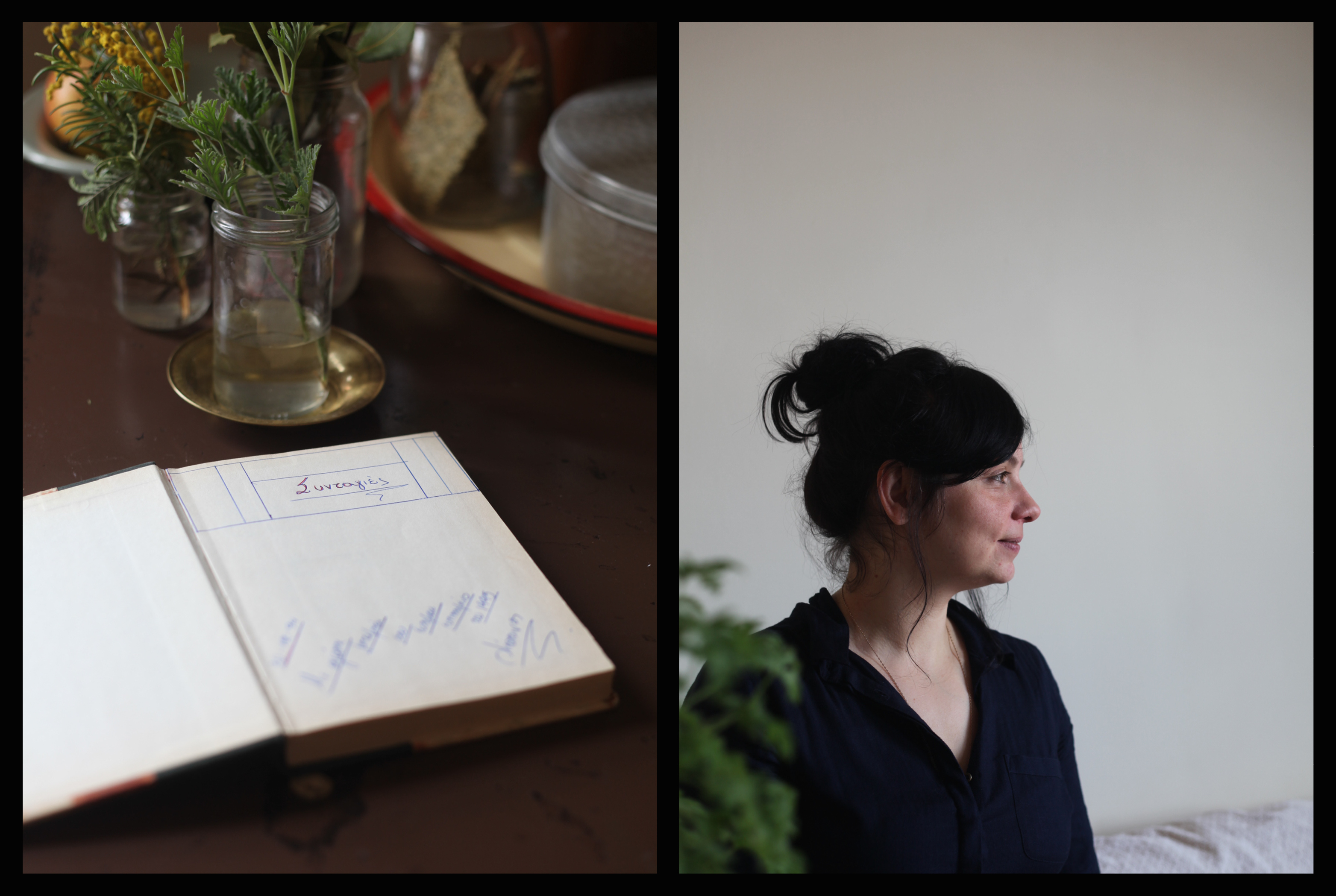
When Tasos left construction and took a new job as a pastry chef he just switched from cement and lime to flour and butter. The quantities didn’t change. This was baking on an industrial scale, catering for the passengers of Olympic airlines. The job consumed him, up at 2am, he’d work all day then return home with armfuls of pastries for his family to taste. Was the texture right? Was it too dry? Was it too sweet? Despina shared her father’s dislike of too much sugar – less sweet meant she could always manage a second piece. His recipes were scribbled on any scraps of paper to hand, from bus tickets to old receipts – and so, as a New Year’s Eve present, Despina gave her father a beautiful hand-bound notebook. Ten years later Despina left home, followed by her sister; and their parent’s marriage disintegrated. As Tasos’s life grew increasingly chaotic after the divorce, Despina’s Mother rescued the notebook from his house. Despina has salvaged her father’s work, transcribing all of his recipes, adjusting the quantities for home cooks and testing them in preparation for a book.
02 Apr 2019
The storm peeled the aluminium strips from the roof as easily as you’d open a tin of sardines. Everything that had been relegated to the attic, essentially lost in the dark, was now really lost – saturated and heaved into neighbours’ gardens. It was Christmas Eve 2013.
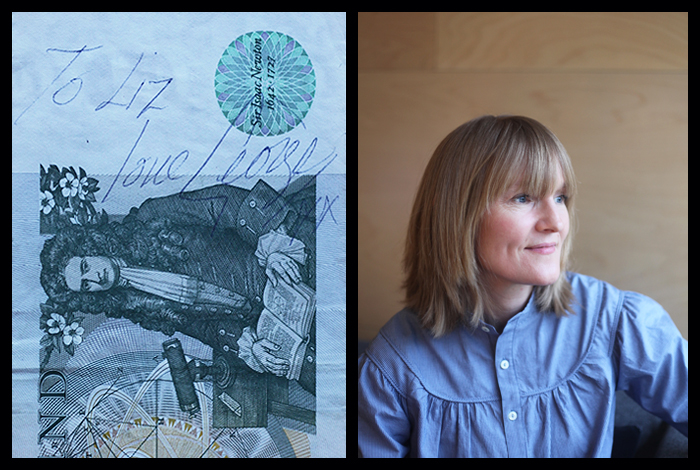
At 14 Liz still looked 12. Her friends, also 14, could easily pass for 17, maybe 18. In 1983 Camden market was thronging with precocious teens buying knock-off Katharine Hamnett tees, incense sticks and old 501s whose knees had long since died and gone to denim heaven. To get to Camden, Liz and her friends took the bus from Pinner and got off at Edgware, a blur of hair-flicking and giggles. But this stopped abruptly. Stepping off the bus opposite, dressed in a white tee, Ray-Bans, Levi’s and a leather jacket, was George Michael. He looked like he’d just come from shooting the video for Wham Rap. He was surprisingly awkward when Sara and Karen asked him for his autograph. Liz’s own shyness and her reluctance to have him sign the only piece of paper she had on her, a valuable one pound note, made her hesitate. He graciously signed it and handed it back with a smile.
George died on Christmas Day, 2016, he was 53. The pound note had been lost for years. The storm had scattered the contents of their attic forever. But the wind had failed to lift a particularly heavy box. The following day Liz and Mason went through the detritus that was left, and there, pressed neatly in a plastic sleeve, was George’s note.
10 Apr 2017

There were enough of them to make up an orchestra, a dozen aunts and uncles, Chris, his three siblings and a rabble of cousins. Life was lived outdoors. In the summer the kids lazed on the beach, cooling off in the stubbornly wintry water. In December the family headed north, bracing themselves for the thwack of wind blowing off Ilkley Moor. They warmed up with milky tea, cake and jazz provided by Horace, Chris’s saxophonist grandad. In the midst of this wholesome childhood were Chris’s Aunt Ange and her boyfriend Adrian. She wore kaftans, he wore Hawaiian shirts, they smoked funny cigarettes and lived in London. The trunk of their old Porsche 923 was a nest of circuit boards and wires cushioning Adrian’s guitar. It was a Fender, an American Standard, picked up on Route 66 after a pilgrimage to Sun Studios. Adrian was building synthesisers for the Pet Shop Boys. Chris was intimidated by this towering, taciturn and brilliant figure, he was too shy to play guitar with him but he was a big influence – Chris went on to a take a degree in music production. After he graduated he planned to move to London but before he finished his studies Adrian was diagnosed with cancer. His new partner, Jane, sold his kit on eBay and the Fairlight synths he’d built for the Pet Shop Boys went to the highest bidder. But the Fender wasn’t sold. Adrian had instructed it be given to Chris. And when Chris picked it up, the gauge of the strings, the length of the strap, everything… ‘fitted like an old jumper’.
20 Mar 2017

Kangan saw Oli’s unfailing charm fail as her mother’s eyes narrowed and she asked him ‘what are your intentions?’ Six months later Oli was on a plane to Ludhiana to get to know Kangan’s parents better. When he arrived he was unceremoniously bundled into the house, out of sight. Kangan’s parents were still adjusting to their daughter’s relationship with a white man. A family road trip was planned. Oli optimistically considered the 1200 mile round trip to Rajestan an opportunity to bond. The journey was occasionally perilous, painted trucks honked their way down the highways, their horns doing less to alert drivers than their gaudy, hand-painted livery. The drive left everyone tired and parched so Kangan’s dad pulled off the road onto an unpaved track to look for a drink. He followed a series of discreet signs, taking half a dozen mis-turns until a building rose up to meet them. It stood incongruously, like an ornate wedding cake, in the shadow of a vast granite hill. Through no plan they had found the old hunting lodge of Jodhpur’s Royal family. It was now a beautiful hotel, its grounds studded with pink Bougainvillea and Frangipani trees. This, Oli and Kangan later decided, was where they would marry. The chief obstacle to getting their friends here was not the flight to India but the poor signage to the remote hotel. The solution was to commission Jally, one man from a whole industry of men dedicated to painting ‘Horn OK Please’ in loud, beautiful, coloured script on India’s trucks.
10 Jan 2017
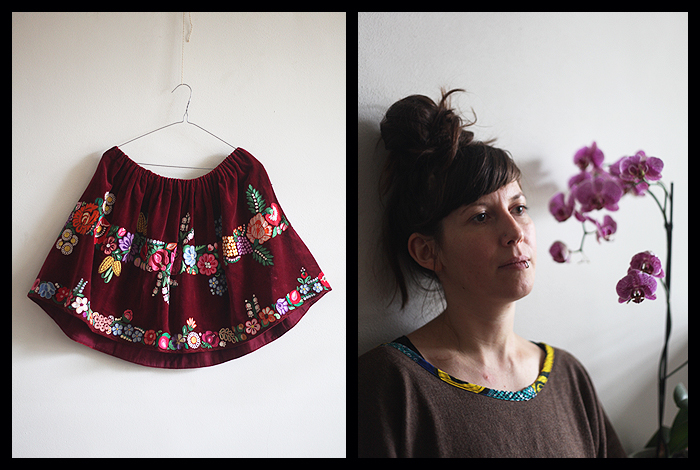
The skirt grazed the floor as Zuzana danced around Zvolenská Slatina’s town hall. She’d borrowed it from a friend. Every few months the younger village kids would dance at local weddings or perform for bleary-eyed parents as they registered their newborns. When Zuz turned 6, her grandmother decided that the dances were regular enough that she deserved her own skirt. Margita’s generosity and modesty meant she commissioned a local seamstress rather than make the skirt herself, in spite her own proficiency. The dark cotton velvet was expertly ‘tambour’ stitched. As Zuz spun around, the stitched flowers and vegetables cycled through the seasons from early Spring Lily-of-the-Valley through to Summer roses and the Autumn harvest of corn. The skirt shrunk, from sitting mid calf to shaving her knees and with her teens came the inevitable period of self-consciousness and she, along with many of her friends, gave up folk dancing. This year Zuz turns 32, she’s not taken up dancing again but on special occasions, she still wears the skirt, which now ‘just covers my arse’.
13 Nov 2016
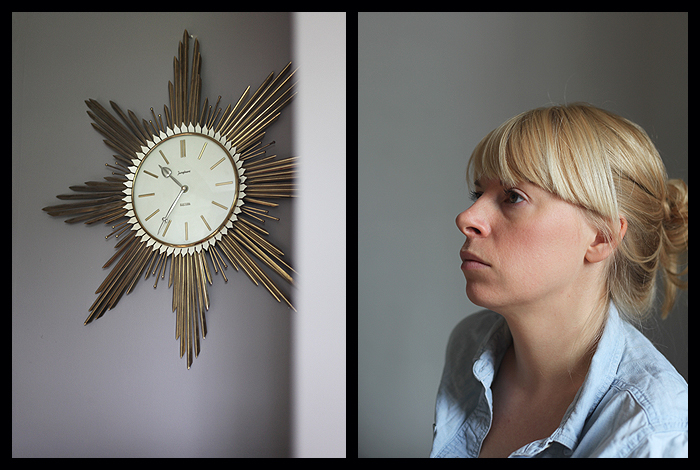
Josie had made toast but the butter dish was empty, she headed out to the corner shop. Her street was piled with bin bags slumped against full wheeley bins after the weekend. They were not pretty, foxes had ripped into the loosely tied plastic carriers scattering the street with slimy salad bags and the mouldy heels of bread. But propped against all this fetid rubbish something glinted. Josie thought it was beautiful. She was having that clock, she’d grab it when she came back from the shop. But half way down the street, she turned around and sprinted back, she grabbed the clock and quickly lodged it inside her front door. She headed out again to get the butter. Five minutes later, she was back on her road, butter in hand. She stopped to let a bin lorry pass. The street was clear again, all the rubbish had gone. And her clock sat safely at the foot of her stairs.
07 Jun 2016
 Subscribe to RSS
 Follow us on Twitter